
Some forward movement is normal when you apply the brakes. The vehicle’s weight shifts toward the front axle as it slows, so the nose naturally lowers a little. The concern begins when the front drops sharply, the rear feels unusually light, or the car takes several motions to settle after you release the pedal.
Excessive brake dive often points toward worn shocks, struts, springs, bushings, or other suspension parts that are no longer controlling weight transfer properly. Brake problems and tire concerns can also contribute, so the entire front end should be checked rather than assuming a single component is responsible.
Worn Front Shocks Or Struts Are A Common Cause
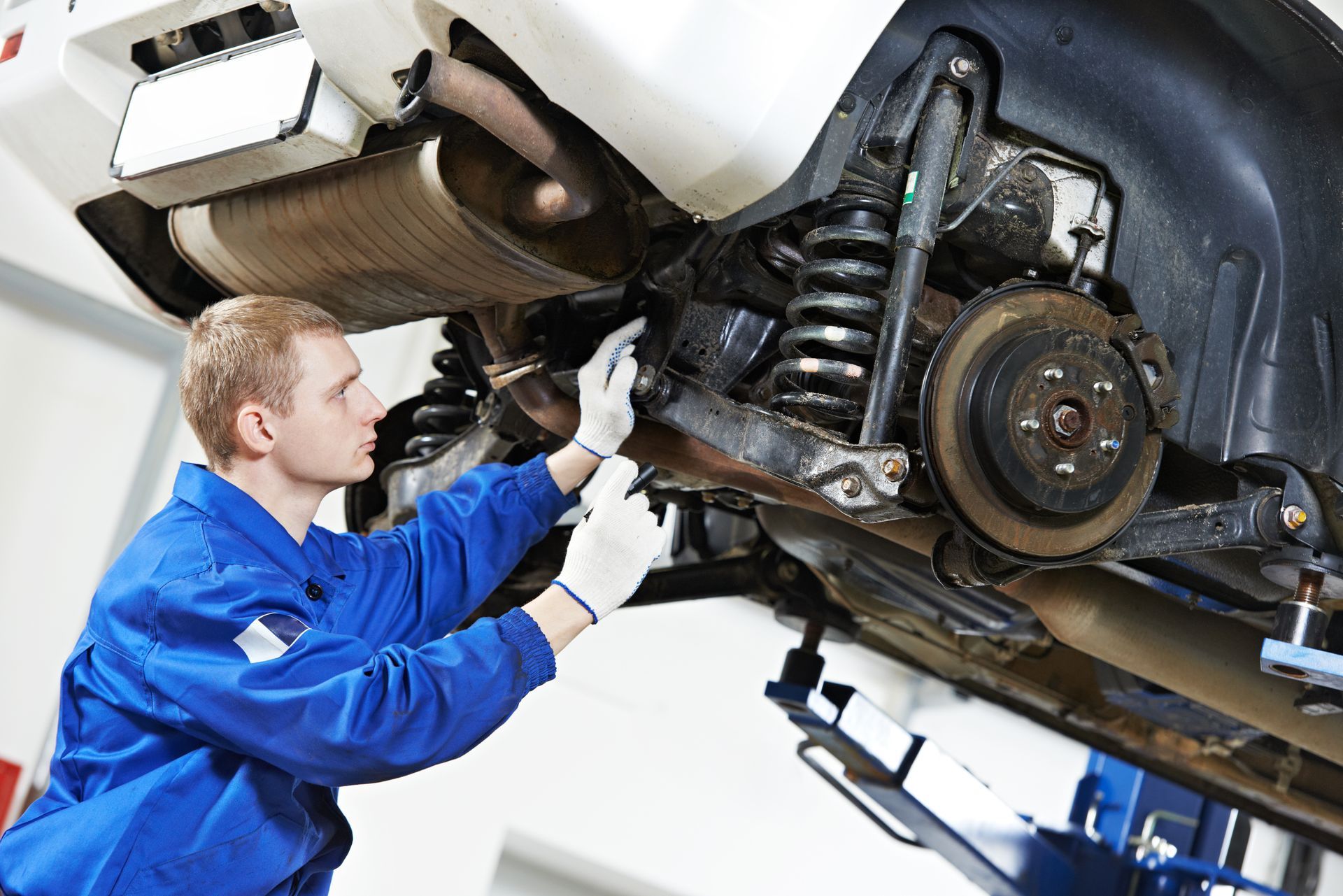
Shocks and struts control how quickly the suspension compresses and rebounds. When you brake, the front springs compress as weight moves forward. Healthy dampers slow that movement and help the vehicle remain stable.
As shocks or struts wear internally, they lose their ability to control the springs. The front end may drop farther and faster than it used to, especially during a firm stop. You may also notice extra bouncing over dips, a floating feeling on the highway, or fluid leaking down the side of a strut.
Weak Or Damaged Springs Can Lower The Front End
The springs support the vehicle’s weight and maintain its ride height. Over time, a spring can weaken, sag, or break near the top or bottom coil. A tired spring may allow the front suspension to compress too easily when braking.
Look at how the vehicle sits on level ground. One corner may appear lower, or the front may sit closer to the tires than it once did. Ride height should be measured during an inspection because small differences can be difficult to judge by eye, especially when the vehicle is parked on uneven pavement.
Control Arm Bushings Can Let The Wheels Shift
Control arm bushings help hold the front wheels in the correct position while still allowing suspension movement. When the rubber cracks, separates, or becomes too soft, the control arms can shift as braking force loads the front suspension.
That movement can make the vehicle dive, pull, clunk, or feel unstable during a stop. The steering wheel may also move slightly as the brakes are applied. An alignment adjustment will not hold correctly if worn bushings allow the wheel position to change every time the vehicle slows down.
Tire Problems Can Make Brake Dive Feel Worse
The front tires handle much of the braking load, so their condition affects how the vehicle feels during a stop. Low pressure, uneven wear, damaged sidewalls, or mismatched tires can make the front end feel less controlled as weight transfers forward.
Poor rear tire grip can also make the back of the vehicle feel light or unsettled. Tire pressure should be checked when the tires are cold, and the tread should be inspected across the full width. Inner-edge wear is easy to miss without looking beneath the vehicle.
Brake Problems Can Create Uneven Weight Transfer
A sticking front caliper or uneven brake pad wear can make one side of the vehicle dip more than the other. If one front brake applies harder, the car may pull, twist slightly, or feel as though one corner is dropping during a stop.
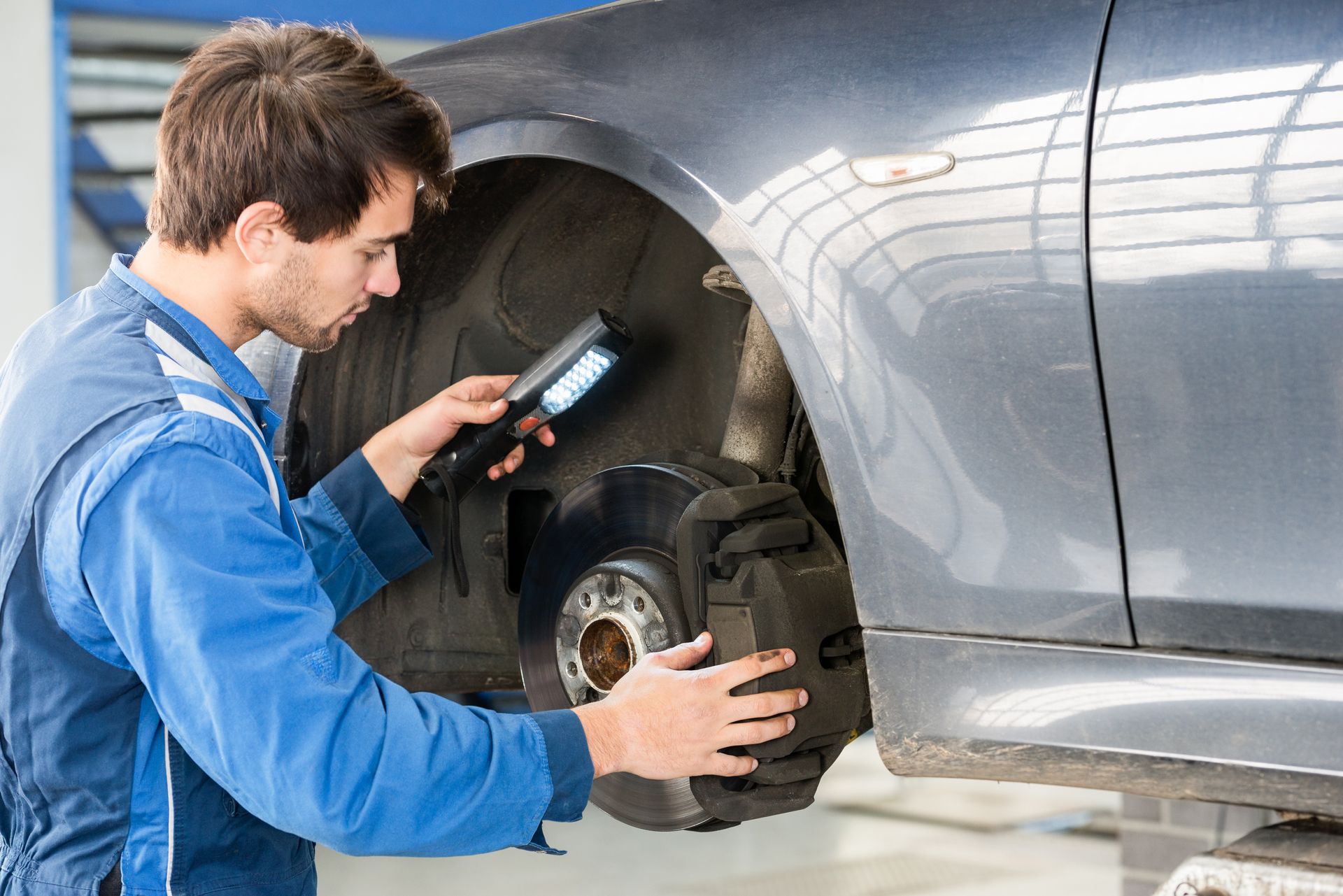
Brake drag can create heat, odor, reduced coasting distance, and unusual rotor wear. A complete brake check should include pad thickness, rotor condition, caliper movement, hoses, fluid condition, and wear differences between the left and right sides.
Signs The Suspension Is Not Controlling Braking Properly
Several symptoms often appear together when excessive brake dive comes from suspension wear.
- The front end drops sharply during moderate braking.
- The rear of the vehicle feels light or loose.
- The car bounces after the brake pedal is released.
- One corner sits lower than the others.
- The vehicle clunks or knocks as weight shifts forward.
- The steering wheel pulls or moves during braking.
- The tires show cupping, feathering, or one-sided wear.
- The car feels less stable during sudden stops.
These clues help direct the inspection, but they do not identify a single failed part on their own. Shocks, springs, bushings, tires, and brakes can all contribute at the same time.
Why Excessive Brake Dive Affects Safety
When the front suspension compresses too much, the rear tires may carry less weight and lose some grip. That can make the vehicle feel unstable during an emergency stop, especially while turning or braking on rough pavement.
Worn dampers can also cause the tires to skip over bumps rather than stay firmly connected to the road. The brakes may be working correctly, but they cannot deliver consistent stopping force if the tires are not maintaining reliable contact with the pavement.
How Technicians Find The Cause
A road test helps show how quickly the front drops, whether the vehicle pulls, and how it settles after braking. The vehicle can then be lifted so that the shocks, struts, springs, control arms, bushings, ball joints, tires, and brake components can be closely inspected.
Ride height, tire wear, damper leakage, joint movement, and brake temperature all provide useful evidence. Regular maintenance can catch early suspension wear before the vehicle begins diving heavily or damaging its tires.
Get Suspension And Brake Diagnostics In Colorado With BG Automotive
If your car dips sharply when you press the brake pedal, BG Automotive can inspect the shocks, struts, springs, control arm bushings, tires, and braking system.
Contact us to schedule an appointment and restore more controlled weight transfer during every stop.