Suspension problems can sneak into a car slowly. At first, the ride just feels a little rougher. Then the steering feels loose, the tires start wearing oddly, or the car takes one bump and keeps bouncing, as if it is not quite done reacting.
That change is not just comfort.
Shocks, struts, and suspension parts help keep the tires planted, the body controlled, and the steering predictable. When those parts wear, the car can still drive, but it may not feel as steady as it should.
1. The Car Keeps Bouncing After Bumps
A healthy suspension should recover quickly after a bump or dip. You hit the bump, the body moves, then the car settles. If it keeps bouncing, floating, or rocking afterward, the shocks or struts are probably no longer controlling spring movement well.
Drivers often notice this first on familiar roads. A dip near home suddenly feels bigger. A speed bump makes the car bounce twice instead of once. On the highway, the vehicle may feel light or unsettled over uneven pavement.
That extra movement puts more work on tires, bushings, mounts, and steering parts. The ride may be annoying, but the bigger issue is that the tires are not staying as firmly connected to the road.
2. The Front End Dives When Braking
Some body movement during braking is normal. The front of the car naturally takes more load when you slow down. But if the nose drops hard every time you brake, or the rear feels light and loose, worn shocks or struts can be part of the problem.
This is one of those signs drivers get used to without realizing it. The car still stops, so it feels like a brake issue or just age. In reality, suspension control affects how stable the vehicle feels when weight shifts forward.
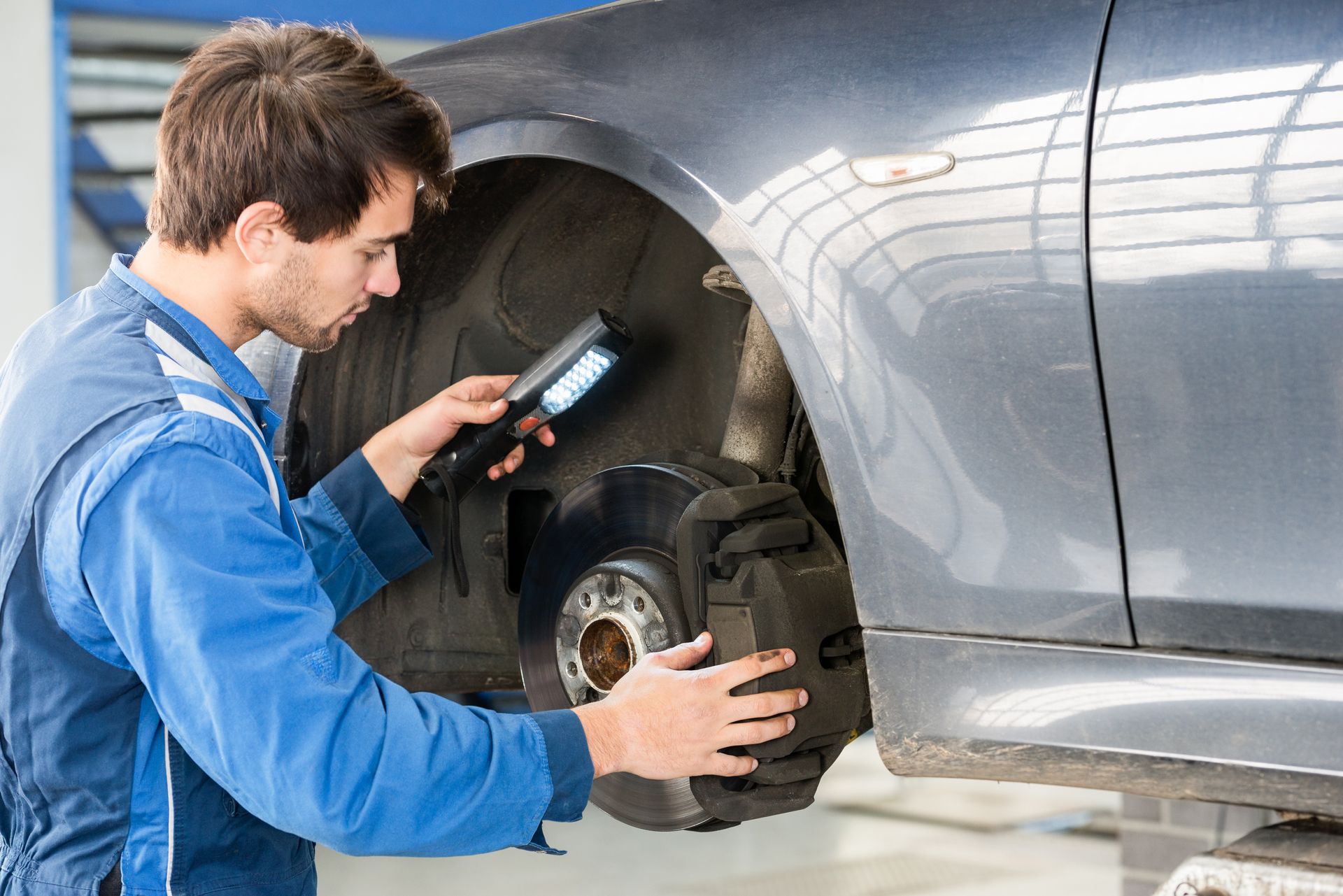
We look at brake wear and suspension movement together because the two systems overlap. A shaking steering wheel might be the rotors. A diving front end might be struts. Sometimes both are involved.
3. Tires Are Wearing In Strange Patterns
Tires tell on the suspension. Cupping, chopping, inside-edge wear, or one tire wearing faster than the others can point to worn shocks, struts, alignment issues, or loose suspension parts. If the tread looks wavy or feels uneven when you run your hand across it, something is not holding the tire steady.
Bad shocks and struts allow the tire to bounce slightly as it rolls. That bounce can create patchy wear and road noise that gets louder over time. Alignment can make the problem worse, but an alignment will not hold correctly if worn parts are letting the wheel move around.
During regular maintenance, tire wear patterns are worth checking before a good set of tires gets ruined early.
4. You Hear Clunks, Rattles, Or Knocking Sounds
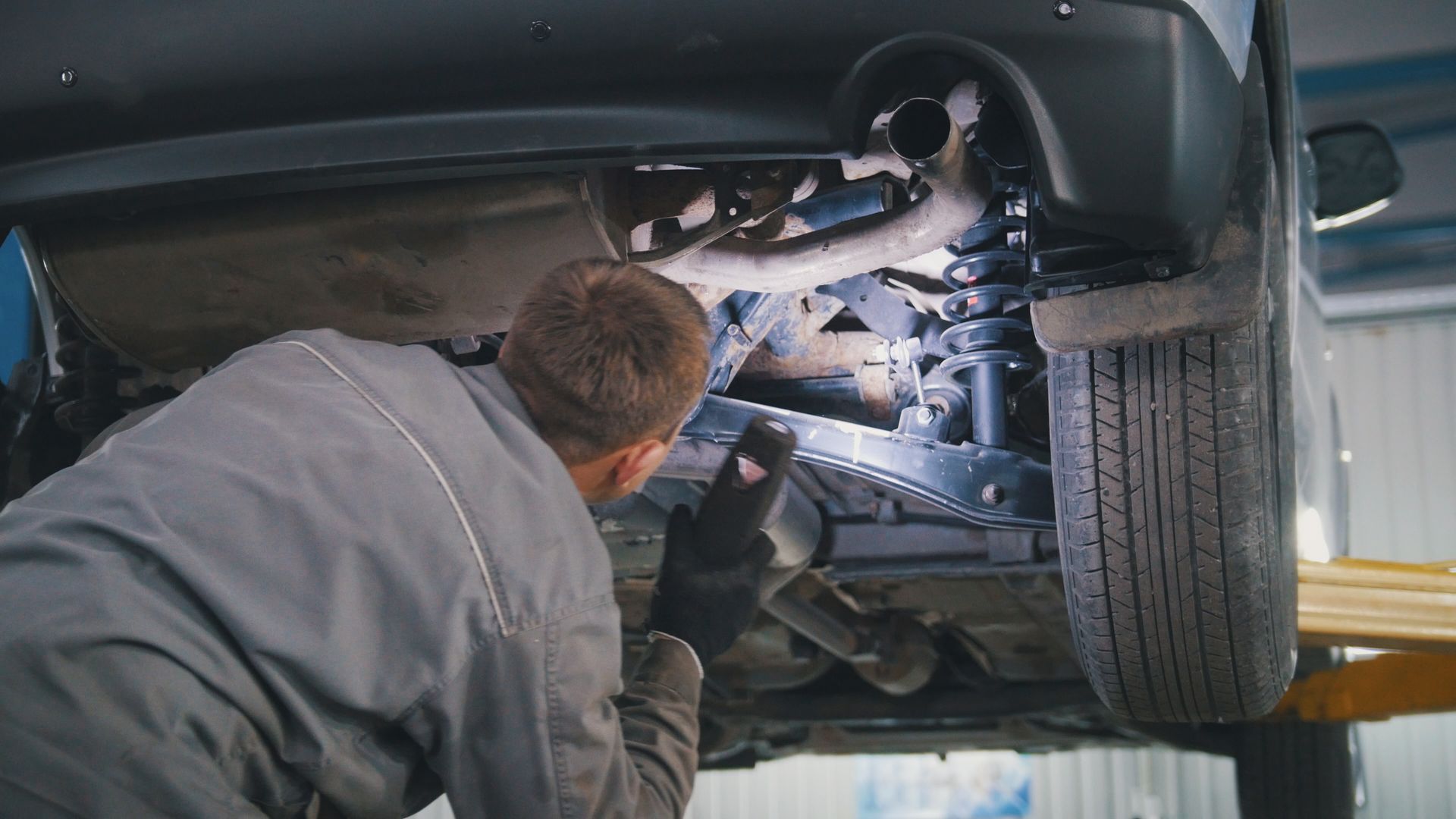
Suspension noise is easy to dismiss until it gets loud. A clunk over a driveway entrance, a rattle over rough pavement, or a knocking sound from one corner usually means something has play, wear, or movement where it should not.
Common sources include sway bar links, control arm bushings, ball joints, strut mounts, shock mounts, and loose hardware. The sound location helps, but it does not always tell the whole story. Noise can travel through the body, making a front-end problem sound like it is coming from somewhere else.
Our technicians pay attention to when the sound happens. Low-speed bumps, turns, braking, and driveway angles all point in different directions. That pattern helps narrow the repair rather than blindly replacing parts.
5. The Steering Feels Loose, Nervous, Or Off-Center
Suspension and steering are closely tied together. If the car wanders, pulls, follows road grooves, or needs constant small steering corrections, the suspension should be checked. A steering wheel that sits off-center after a pothole hit is another sign that something changed underneath.
The cause could be alignment, tire pressure, worn tie rods, control arm bushings, ball joints, struts, or a bent component from impact. The important thing is not to keep driving until the tires show damage.
A car that feels nervous at highway speed is tiring to drive. It also gives you less confidence when you need to brake, turn, or make a quick correction.
Why Suspension Service Should Not Wait Too Long
Worn shocks, struts, and suspension parts rarely stay isolated. One loose part allows extra movement, and that movement stresses the parts around it. Tires wear faster. Braking feels less steady. Steering gets less precise. Small noises turn into bigger ones.
A proper inspection can separate worn shocks or struts from alignment problems, tire issues, and loose steering parts. That matters because replacing one part without checking the rest can leave the car feeling only half fixed.
If the car feels bouncy, noisy, loose, or uneven on the road, it is worth checking before tire wear or steering problems stack up.
Get Shocks, Struts, And Suspension Service In Colorado, With BG Automotive
If your vehicle is bouncing, clunking, pulling, or diving when braking, or if your tires are wearing unevenly, BG Automotive in Colorado can check the shocks, struts, steering, tires, and related suspension parts.
Schedule a visit and get the car feeling steady, controlled, and easier to trust on the road again.